Refining the Future of Energy – Right Here in Teesside

tees valley lithium (TVL)

Building the UK's Flagship Lithium Refinery

As demand for battery-grade lithium skyrockets, we’re delivering a world-class, independent solution to one of the energy transition’s biggest bottlenecks: refining capacity.

Our mission is clear - to create a secure, low-carbon, and scalable supply of high-purity lithium for the European electric vehicle and energy storage markets.

Company Presentation
TVL Today.
TVL Today

Leading the charge in sustainable lithium refining.

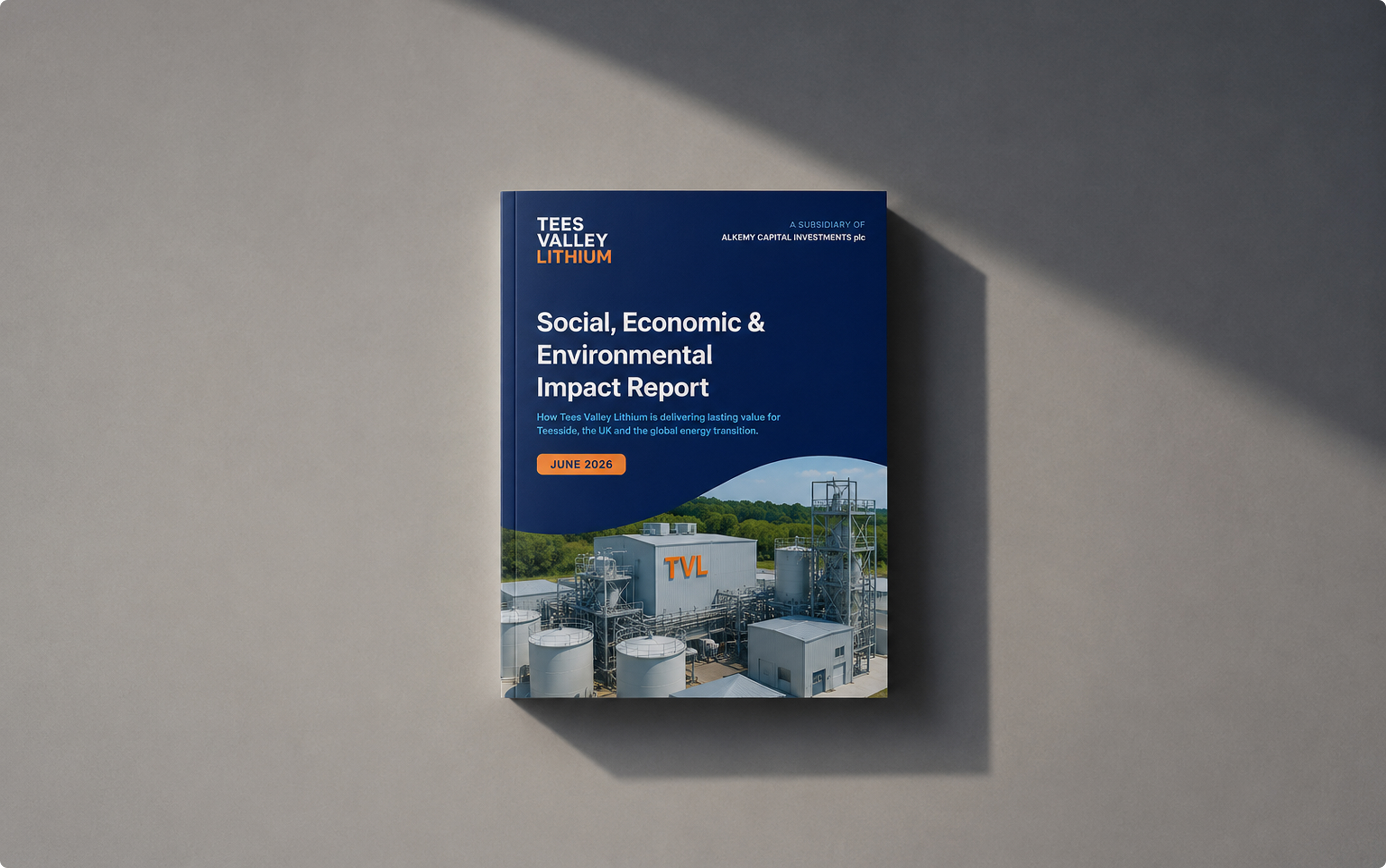
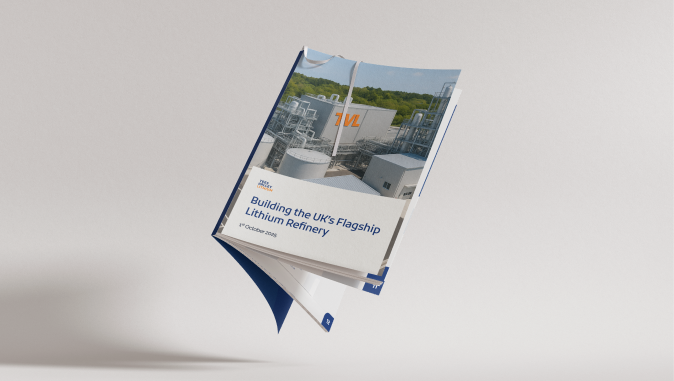
Tees Valley Lithium’s latest report highlights our continued progress in developing the the UK's flagship lithium refining hub.
overview

The October 2025 Company Update outlines major developments from the Front-End Engineering Design (FEED) phase through to market information from SC Insights. With construction scheduled to begin in mid-2026, TVL remains on track to deliver battery-grade lithium hydroxide by early 2028.

Category
Corporate Report
Length
30 Pages
Published
1 October 2025
Focus Area
Project Development
Highlights from This Edition
Engineering Progress
FEED study advancing on schedule toward Final Investment Decision (Q1 2026).
Capital Efficiency
Estimated CAPEX now below $245m - the lowest capital intensity in Europe - with optimised design and modular construction.
Regional Growth
Supporting job creation, innovation, and sustainable industry in Teesside.
WHAT WE DO

TVL is reshaping the battery materials supply chain

Local, Low-Carbon Refining


Establishing a local, clean refining capacity in line with the EU Critical Raw Materials Act and the UK’s Net Zero ambitions.

Proven Technology, Maximum Efficiency

Using proven, OEM-validated technology to achieve the highest levels of product quality and process efficiency

Reducing Import Dependency

Reducing Europe’s dependence on overseas processing, bringing essential industrial capability back onshore.

how?
Our facility will begin production in 2027 with a 25,000 tpa Phase 1 and scale up to 100,000 tpa — enough to supply more than 2 million electric vehicles per year.
Located on a
brownfield site
Access to
deepwater port
Powered by
renewable energy
Strong regional
infrastructure
The Time is Now

As global battery makers ramp up UK production, the need for reliable, local lithium supply has never been greater

Tees Valley Lithium (TVL) is proud to announce that we have been awarded the Innovation Award at the 2025 Battery Britain Gala — a national celebration of the companies, technologies and partnerships shaping the future of the UK’s electrification and battery ecosystem. The honour recognises TVL’s pioneering work in establishing the UK’s first large-scale lithium refinery and delivering the midstream capability required to support gigafactories, strengthen supply chains and reduce reliance on long, carbon-heavy overseas processing routes.

The award was presented following a keynote speech delivered by Vikki Jeckell, CEO of Tees Valley Lithium, who addressed the realities of building industrial capability in the UK, the importance of partnership, and the strategic role Teesside will play in powering Britain’s energy transition. In her remarks, Vikki highlighted the eleven-hundred-percent increase in lithium demand projected under the UK’s new Critical Minerals Strategy, and emphasised that innovation is not just about patents or technology, it is also about building new industrial pathways, modernising supply chains, and delivering projects the UK has never had before.

She also spoke candidly about the challenges of building chemical processing facilities in the UK: the slowest planning approvals in the G7, higher construction costs than Europe, and operational pressures such as some of the highest industrial energy prices on the continent. But she noted that TVL is overcoming these hurdles through world-class engineering partnerships with Veolia and Wave International, a modular and UK-optimised design, and the strengths of Teesside’s globally recognised industrial heritage.

The room responded with enthusiasm, and the Innovation Award that followed reflected both the ambition of the project and the leadership TVL is demonstrating within the UK battery materials sector.

Below is the full transcript of the keynote speech delivered on the night.

Keynote Speech Transcript:

Good evening, everyone. It is a privilege to be here tonight, surrounded by people who are shaping the future of Britain’s energy, industry and innovation.
And before I go any further, I want to thank Richard and the organisers for bringing us together this evening. Events like this matter, because they give us the space to think, to connect, and to build momentum behind the projects that will define Battery Britain.

When we talk about batteries or gigafactories, it is easy to focus on the shiny end-products, the EVs rolling off production lines or the storage systems powering the grid. But the truth is this: nothing happens without the materials. They are the heartbeat of the energy transition. And for too long, we have relied on long, fragile, carbon-heavy supply chains.

We therefore welcomed the recent release of the UK’s new Critical Minerals Strategy. A strategy that openly acknowledges that the UK’s demand for lithium is set to rise by eleven hundred percent by 2035. For many, it was simply a policy announcement. But for those of us building projects on the ground, it felt like something much bigger. It felt like a signal that Britain is ready to step back into a role it knows well a nation that builds things, that leads in engineering, and that backs its own ambition.

And for us this strategy also felt like recognition of what regions like Teesside have always known: that places with deep industrial heritage, world-class engineering talent, and communities built on making things possible, are exactly where Britain should be investing. Teesside powered the industrial revolution once and today it is ready to power the battery revolution.

But ambition on its own is not enough.
If the UK truly wants to rebuild industrial capability, we must also recognise the scale of the challenge in front of us. Because building a new facility here, particularly a chemical processing plant, is not easy. In fact, it is one of the hardest industrial undertakings in this country.

So, before I talk about what we are doing at TVL, let me start with the reality of the environment we are operating in. The statistics tell their own story.

The UK has the slowest industrial planning approvals in theG7, with major projects often taking five to seven years before a spade even touches the ground. Nearly sixty percent of large UK projects run late or overbudget, and we build new industrial facilities at less than half the speed of many of our competitors. And it costs more too, building a new plant in the UK can be twenty to thirty percent more expensive than constructing the same facility elsewhere in Europe.

And that is just the construction side.

Operating a chemical plant here comes with its own pressures. Large energy users in the UK pay between twenty and eighty percent more for electricity than their counterparts in France, Germany or the Netherlands. Carbon and compliance costs are among the highest in Europe. Andover the past two decades, this environment has contributed to almost half of the UK’s large chemical production sites closing.

These are not small hurdles.
They are structural disadvantages, the kind that would make most companies choose not to build here at all.

And yet, despite all of those challenges, Tees Valley Lithium is proving that it can be done and can be done well.

We have built this project in a way that turns those disadvantages into strengths. By partnering with Veolia and Wave International, we are using proven, world-class technology and disciplined engineering to shorten timelines, reduce risk and remove uncertainty from construction. We chose Teesside because it gives us access to an existing chemical cluster, a skilled workforce, shared infrastructure, and a region that knows how to build complex plants safely and efficiently. And we have designed a refinery that is modular, expandable and optimised for UK conditions, allowing us to manage energy use, streamline operations and control costs far more effectively than traditional, older plants.

In short, we are overcoming the barriers by doing three things well, choosing the right partners, choosing the right region, and choosing a design that fits the UK of today, not the UK of twenty years ago. And that is how TVL is turning one of the hardest industrial environments in the world into one of the most strategic opportunities for Britain.

At Tees Valley Lithium, that is the mission we are driving forward.

Tonight, we are joined by two of our most important partners: Veolia and Wave International. They represent something powerful: not just technology and engineering, but the idea that when the right partners come together with a shared purpose, the impossible becomes achievable.

Now, in terms of our progress.
Our FEED study is in its final stretch. Months of engineering, design and operational planning have brought us to a point where our focus now shifts from designing to constructing. Every part of the project is moving, in parallel, with purpose, and with pace.

And when we reach first production in early 2028, we will be doing far more than producing battery-grade lithium. We will be creating skilled jobs, anchoring supply chains, strengthening gigafactories, and positioning Britain as a credible, competitive player in global battery materials.

Which is why tonight feels hopeful.

Because when government, industry, investors, engineers and innovators come together, when partners like Veolia and Wave stand alongside a region like Teesside, we unlock the kind of industrial capability that Britain needs to compete and win.

So my message is simple.
Britain can do this.
Teesside can do this.
And together, we are already doing it.

Thank you and I look forward to speaking with many of you this evening about how we can all be part of the next chapter of Battery Britain.

Vikki Jeckell

CEO Tees Valley Lithium

Tees Valley Lithium (TVL) has launched its Supplier Expression of Interest (EOI) process as the company continues to progress its Front-End Engineering Design (FEED) study for the UK’s first large-scale lithium hydroxide refinery.

The new Supplier EOI Portal provides an opportunity for businesses of all sizes to register their interest in supporting the project’s delivery, construction, and future operations. Companies are invited to select all relevant project categories and services they can offer – from civil engineering and fabrication to logistics, maintenance, and specialist chemical services.

Once registrations are received, the TVL team will review submissions and issue Pre-Qualification Questionnaires (PQQs) to suitable suppliers. This process will help build a strong and diverse local supply chain to support the refinery as it moves towards its Final Investment Decision (FID) in early 2026.

Pauline Sumner, Project Procurement of Tees Valley Lithium, said:

“This is an exciting time for Tees Valley Lithium and the broader Teesside region. We’re calling on suppliers, both established industry players and local SMEs, to register their interest and become part of this landmark project for the UK battery materials industry.”

To learn more about upcoming opportunities, please click the link below to access the registration form.

📎 Register Your Interest Here

This is more than a refinery

It’s the foundation of Europe’s **clean energy future**

Made in Teesside, built for tomorrow.